
Anker SOLIX C300
A practical portable power station with 288Wh capacity and long-life LiFePO4 cells, best matched to the device wattages and runtime you actually need.
The single most useful skill when buying a portable power station is working out what it will actually run, and for how long. It comes down to two numbers and one simple sum. This guide explains watts, watt-hours and runtime in plain English so you buy the right size first time.
Two figures decide everything:
Think of watts as the flow rate and watt-hours as the size of the tank. You need the station's output watts to be higher than the device's watts to run it at all, and enough watt-hours to keep it running for as long as you need.
Here is the approximate maths, which is close enough to choose a size. Runtime in hours is roughly the usable watt-hours divided by the device's wattage. Then subtract around 10-15% for inverter conversion losses (a bit more for very small loads). So a 1000Wh station running a 100W device gives about 1000 divided by 100, which is 10 hours, then minus losses leaves roughly 8-9 hours. The same station running a 250W device lasts around three to four hours. Every runtime figure, including the manufacturer's, is a best-case estimate, so leave yourself margin.
Most appliances list their power draw on a label or in the manual, usually in watts (W). If only amps (A) and volts (V) are shown, multiply them: watts equals volts times amps, so a 230V, 2A device draws about 460W. Watch for two figures on motors and fridges: a running wattage and a higher start-up surge when the motor kicks in. The station must be able to handle the surge as well as the running load, which is why units quote both a rated and a surge (peak) output.
As a realistic guide, a 1000Wh, 1000W-class station will comfortably run:
It can also briefly power higher-draw items within its surge limit. What it cannot sustain are high-wattage heating appliances, covered next.
Anything that makes heat draws a lot of power, and portable stations are not built for it. Electric kettles, fan and bar heaters, toasters, hair dryers, microwaves, electric ovens and hobs typically draw 1500-3000W. They will either exceed a typical station's output and refuse to start, or run for only a few minutes before flattening the battery. Air conditioners and power tools with big motors are similarly demanding. Plan to use a portable power station for electronics and essentials, and use other means for heating and cooking.
A few quick examples on a 1000Wh unit (approximate, after losses):
The buying tip: total up the watt-hours your essentials need per day, then choose a battery comfortably above that, and make sure the output watts clear your highest-draw device including its start-up surge.
A practical portable power station with 288Wh capacity and long-life LiFePO4 cells, best matched to the device wattages and runtime you actually need.

A practical portable power station with 1024Wh capacity and long-life LiFePO4 cells, best matched to the device wattages and runtime you actually need.
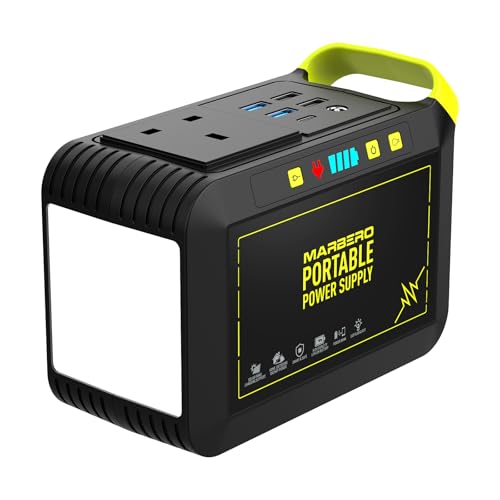
A practical portable power station with 88Wh capacity, best matched to the device wattages and runtime you actually need.
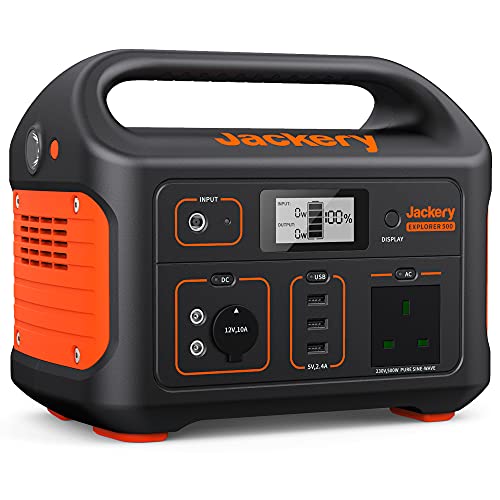
A practical portable power station with 518Wh capacity and solar charging, best matched to the device wattages and runtime you actually need.

A practical portable power station with 1070Wh capacity and long-life LiFePO4 cells, best matched to the device wattages and runtime you actually need.

A practical portable power station with 256Wh capacity and long-life LiFePO4 cells, best matched to the device wattages and runtime you actually need.
Divide the battery's usable watt-hours by your device's wattage for an approximate runtime in hours, then subtract around 10-15% for conversion losses. For example, a 1000Wh station running a 100W device lasts roughly 8-9 hours in practice. Treat all runtime figures as best-case estimates.
Watts (W) measure power - how much a device draws or the station can supply at once. Watt-hours (Wh) measure energy - how much the battery holds in total. You need enough watts to run a device and enough watt-hours to keep it running for the time you need.
Only very briefly, if at all. Kettles and heaters typically draw 1500-3000W, which often exceeds a portable station's output and drains the battery in minutes even when it does start. Portable power stations are designed for electronics and essentials, not high-wattage heating or cooking.
Comfortably: phones, tablets, a laptop, LED lights, a router, a TV, a CPAP machine and a small fridge for a useful stretch, plus brief higher-draw items within its surge limit. It cannot sustain electric kettles, heaters, toasters or ovens, which draw far too much power.
Our top pick is the Anker SOLIX C300 (our score 9.6/10) - A practical portable power station with 288Wh capacity and long-life LiFePO4 cells, best matched to the device wattages and runtime you actually need..