Anker vs Jackery Portable Power Stations (2026)
We compare the Anker SOLIX C300 and the Jackery Explorer 500 across every dimension that matters - our scores, the key specs, and how each performs on the things you will actually notice day to day.

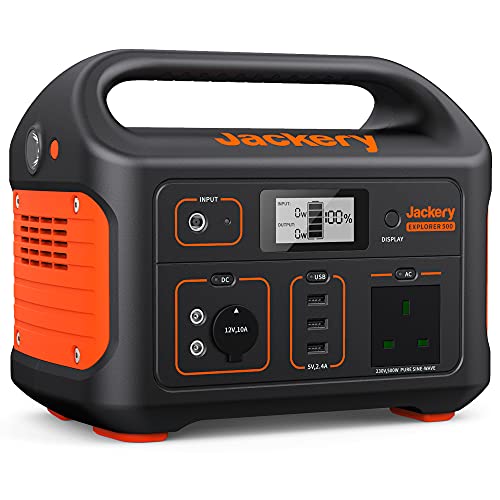
At a glance
| Anker SOLIX C300 | Jackery Explorer 500 | |
|---|---|---|
| Our score | 9.6/10 | 9.2/10 |
| Best for | Phones, laptops and light camping use | Camping, day trips and powering essentials during outages |
| Not ideal for | Running fridges or power tools | Whole-home backup without a much larger system |
| Brand | Anker | Jackery |
Specifications compared
| Anker SOLIX C300 | Jackery Explorer 500 | |
|---|---|---|
| Battery | 288Wh LiFePO4 | 518Wh lithium-ion |
| Solar input | 100W Up to, with solar panel pairing noted | Up to 100W |
| Weight | 4.1kg Portable | 6 kg |
Capacity and What It Powers
Anker SOLIX C300
With a 288Wh LiFePO4 battery, this portable power station (model A1722) is designed for common electronics rather than heavy mains appliances all day. It can supply up to 300W rated power, with a 600W surge peak, so short starting loads may be possible, whereas continuous high-draw devices may drain the battery quickly. This makes it suitable for phones, tablets, laptops, small fans and other travel gear where power demand is spread across the day. For longer sessions, pairing the Anker with a 100W solar panel can help maintain charge, depending on conditions.
Jackery Explorer 500
With a 518Wh lithium-ion battery and a rated 500W AC output, the Jackery is mainly suited to running common home and camping electronics rather than high-draw appliances. It can run AC devices that need a stable supply, such as a TV, and it also supports smaller loads via its car and USB connections. Limits apply for higher-watt equipment, since the station is capped at 500W AC and 1000W surge at peak. Its 518Wh capacity fits short sessions for lights, electronics and car accessories.
Output and Ports
Anker SOLIX C300
Output on the portable power station (model A1722) is rated at 300W, and it supports a 600W surge peak for short bursts. The ports shape day-to-day versatility. The unit includes 2x AC outlets rated at 300W, a 120W car socket, two USB-C outputs rated up to 140W, plus a 15W USB-C and a 12W USB-A. For mixed charging, devices can share power, though peak demand may still reduce runtime.
Jackery Explorer 500
Output and ports are built around the Explorer 500's main AC outlet and its lower-voltage charging options. The standard pure sine wave AC socket supplies 230V and is rated at 500W, with a 1000W peak surge. For smaller devices, it includes a 12V/10A carport plus three USB ports rated at 5V, 2.4A each, supporting phones, laptops and car accessories. The layout is straightforward for setup, but it is best to check device requirements, since only the AC output is clearly specified as 500W for continuous use.
Recharging and Solar
Anker SOLIX C300
Recharging the Anker (A1722) is designed for several common scenarios, so the charging method can be matched to where the unit is being used. In the portable power station experience, it supports fast wall charging to reach 80% in about 50 minutes. It can also be topped up via a car socket, or through the PD 3.1 USB-C port, although the timing depends on the charging source. For solar use, the Anker SOLIX C300 solar generator approach supports up to 100 W input and works best with the Anker W solar panel. It is not compatible with SOLIX PS30 or other 5 V~3 A USB-C solar panels.
Jackery Explorer 500
Recharging is as important as running devices, and the Explorer 500 is built for flexible charging where power is needed. It can recharge from a wall outlet, a car outlet, or a generator, and it works as the portable power station solar generator. With up to 100 W solar input, pairing it with the Jackery W panel can take about 9.5 hours to recharge, although recharge time varies by location, temperature and weather. For readers comparing the best solar generator options in the UK, solar input is most practical when sunlight is consistent, while mains charging is faster when conditions are poor.
Battery Type and Lifespan
Anker SOLIX C300
Built around a LiFePO4 (lithium iron phosphate) battery, the portable power station (A1722) is designed for long service life rather than short-term peak output. The pack is rated for 3,000+ cycles, and the manufacturer also claims 10 years of power. The Anker pros and cons primarily come down to durability versus gradual capacity wear over repeated charging. For day-to-day recharging, it can be topped up via wall, car, or PD 3.1 USB-C, which helps users manage cycle counts.
Jackery Explorer 500
Inside the portable power station sits a lithium-ion battery with a 518Wh capacity, and that capacity largely determines how much time it can run devices before it needs a recharge. The battery acts as the main energy store, so battery lifespan depends on how often it is fully cycled and how heat is managed. The unit includes temperature protection and protections for overcharge, short circuit, overcurrent, and overpower, which can help reduce unsafe electrical stress.
Portability and Build
Anker SOLIX C300
Even with its powerful 300 W class output, the portable power station (A1722) is built to remain transport-friendly. It weighs 4.1 kg and measures 16.4 x 16.1 x 24 cm (L x W x H), helping it fit in car boots and travel bags. At the same time, the 4.1 kg weight is still awkward for one-handed carrying. Build and handling are travel-oriented, with impact resistance and quiet operation rated at 25 dB at 3.3 ft. Carrying uses included support points for straps.
Jackery Explorer 500
How portable is the Jackery Explorer 500 in everyday use? The build is compact and practical, weighing 6 kilograms and measuring 10L x 10W x 10H millimetres (as stated). That size makes it easier to carry to a campsite or load into an RV, even when space is tight. It also includes standard ports for AC, 12V, and USB, so setup is straightforward. The Jackery price may affect purchase decisions, but the overall portability supports its use as a portable power station for camping.
Who Is This Power Station For?
Anker SOLIX C300
Who is this portable power station (A1722) aimed at, and where does it make the most sense to use it? It is designed for people who want a compact, lightweight backup, or a travel-ready power bank for everyday devices. With a 288Wh capacity and up to 300W AC output (600W surge), it is suited to running phones, laptops, small lights and some small appliances, particularly for short trips and outings where portability matters. It also fits the use case behind searches such as "best portable power station uk", focusing on convenient, on-the-go charging.
Jackery Explorer 500
Who is the portable power station for? It suits people who want a portable power station for outdoor use with solar panel charging, particularly RV-ers and campers. With a 518Wh capacity and a 230V 500W pure sine wave AC output (1000W surge peak), it fits common devices such as TVs, chargers, laptops and small appliances. It also supports car-related use via its 12V/10A and USB ports, which can power items like car coolers, vacuums and air pumps. Anyone asking whether the Jackery is any good should expect best results when driving moderate loads.
Anker SOLIX C300: pros
- 288Wh capacity
- 300W rated output (600W surge peak)
- Long-life LiFePO4 battery
- Solar-ready (up to 100W solar input)
Cons
- Solar panel usually sold separately
- Not a substitute for whole-home backup
Jackery Explorer 500: pros
- 518Wh capacity
- 500W rated output (1000W surge peak)
- Solar-ready (up to 100W solar input)
- Quiet, fume-free portable power
Cons
- Solar panel usually sold separately
- Not a substitute for whole-home backup
Our verdict
Our pick is the Anker SOLIX C300 (our score 9.6/10) - A practical portable power station with 288Wh capacity and long-life LiFePO4 cells, best matched to the device wattages and runtime you actually need. The Jackery Explorer 500 is still worth it if it is cheaper when you check, or if it better matches your specific needs.