Jackery Explorer 1000 vs EcoFlow DELTA 2
We compare the Jackery Explorer 1000 and the EcoFlow DELTA 2 across every dimension that matters - our scores, the key specs, and how each performs on the things you will actually notice day to day.

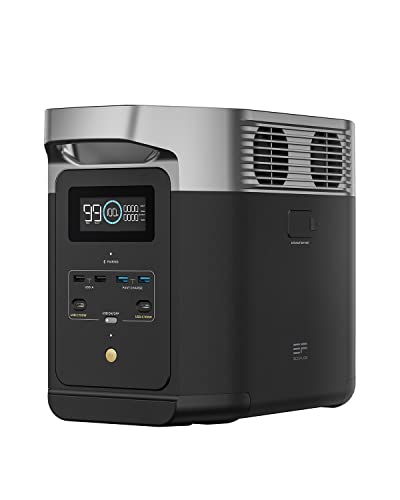
At a glance
| Jackery Explorer 1000 | EcoFlow DELTA 2 | |
|---|---|---|
| Our score | 9.1/10 | 8.9/10 |
| Best for | Home backup, caravans and running larger appliances | Camping, day trips and powering essentials during outages |
| Not ideal for | Whole-home backup without a much larger system | Whole-home backup without a much larger system |
| Brand | Jackery | EcoFlow |
Specifications compared
| Jackery Explorer 1000 | EcoFlow DELTA 2 | |
|---|---|---|
| Output | 1500W AC, 3000W surge | 1800W rated |
| Battery | 1070Wh, LiFePO4, 3000+ cycles | LiFePO4, 3000+ cycles |
Capacity and What It Powers
Jackery Explorer 1000
With a 1070Wh battery capacity, the Portable power station (JE-1000D, Explorer 1000 v2) is designed to run common home and outdoor devices, with real-world runtime depending on the power draw of each connected device. In an overview review, typical use cases include powering small appliances and camping gear. The unit supports up to 1500W AC (up to 3000W surge peak) for short starts, so higher-power appliances only work when their peak demand remains within the rated limits. Runtime planning should be based on device wattage, then adjusted for heavier loads.
EcoFlow DELTA 2
With expandable storage ranging from 1kWh to 3kWh, this portable power station can be configured for short trips or longer off-grid use. Capacity is the key planning point because it determines how long lights, phones, and small appliances can run. The standalone unit begins at 1kWh, and additional batteries raise total capacity to 3kWh. With a claimed 1800W output, it can run many typical devices, but very power-hungry tools may reduce practical runtime. Cycle life is rated for 3000+ cycles.
Output and Ports
Jackery Explorer 1000
Output on the Jackery (JE-1000D, Explorer 1000 v2) is built around a 1500W rated AC output, and it can handle short starts up to a 3000W surge peak. It includes two Pure Sine Wave AC ports, plus USB-C and USB-A, and a DC car port, supporting multiple devices at once. The outlet mix and surge limit are the key factors for matching loads, since higher-demand appliances need their start-up draw to stay within those surge limits. It suits a wide range of home and outdoor power needs, but induction and other heavy starting devices require care.
EcoFlow DELTA 2
Output and ports matter because they determine which devices can run at the same time, and how straightforward it is to connect multiple loads. The EcoFlow lists 1800W rated output and 13 outlets, and states that this can power about 90% of appliances. The port layout supports mixed use, allowing users to run smaller essentials such as lights and chargers while also powering larger devices, as long as total draw stays within the 1800W rated output.
Recharging and Solar
Jackery Explorer 1000
Recharging and solar utilisation are key to how well the portable power station (JE-1000D, Explorer 1000 v2) supports everyday routines and emergency needs. It can recharge quickly, reaching full power in 60 minutes when controlled via its app. For AC recharging, it supports 100W PD fast USB-C charging (input and output), and it also offers multiple charging modes in the app. If solar input is low, charging takes longer.
EcoFlow DELTA 2
Recharging is a key part of day-to-day use with the portable power station, especially when power is needed quickly or without staying off-grid. This ecoflow delta 2 review covers wall charging and solar charging. The manufacturer states the unit supports 7x faster charging, reaching 0-80% in 50 minutes, which helps after a short outage. For solar charging, the ecoflow solar generator accepts up to 500W of panel input, allowing recharging while camping or during an RV trip. Storage can be expanded from 1-3kWh by adding extra batteries.
Battery Type and Lifespan
Jackery Explorer 1000
The Jackery uses a LiFePO4 battery, and this battery type is relevant to both day-to-day performance and how the unit holds up after repeated charging cycles. The manufacturer states the battery supports around 4,000 life cycles and retains over 70% capacity. The unit also includes app-based charging modes, which can help tailor charging behaviour rather than using a single fixed rate. The long lifespan of LiFePO4 is a key reason some buyers choose this type of battery, but exact real-world results can vary. So, is the portable power station any good for long use?
EcoFlow DELTA 2
The EcoFlow uses a LiFePO4 battery chemistry, which the manufacturer says is designed for a long service life, with a typical cycle life of 3000+ cycles. This matters because it supports repeated charging, so the power station can be used for years if conditions are reasonable. A battery management system is said to auto-regulate for safety, which can reduce stress during use. Exact lifespan still depends on how often it cycles, how full it stays, and charging habits.
Portability and Build
Jackery Explorer 1000
For people who need power on the move, the Jackery Explorer 1000 is designed to be transport-friendly, with its build prioritising portability and basic durability. It weighs 10.8 kilograms and measures 34L x 23W x 28H cm. An ergonomic handle is included to make lifting easier, but it is still a heavy portable power station for camping, particularly during long carrying stretches. The unit uses an outdoor-ready casing with LiFePO4 safety features. LED lights are also built in to help with visibility during setup.
EcoFlow DELTA 2
How portable is the portable power station for everyday use, including camping and RV trips? The unit weighs 12kg and measures 40 x 21.1 x 28.1cm, so it is manageable for moving between a vehicle and a campsite, though not light like a small power bank. It is built as a standalone portable power station for camping, and its compact footprint helps it fit in tighter RV storage. The EcoFlow DELTA 2 delta 2 amazon listings commonly highlight its expandable setup, yet portability still depends on how it is handled and the available space in the vehicle or RV. Its LFP build is positioned for durability, but the bulkier size can limit quick carrying.
Who Is This Power Station For?
Jackery Explorer 1000
Weighing 10.8 kilograms and measuring 34L x 23W x 28H cm, the Jackery is designed for carrying a serious battery rather than relying only on wall outlets. It is suited to households seeking a power station for power cuts when 1500W AC for common appliances is needed, and it fits campers or hikers who want to run multiple devices via USB-C, USB-A, a DC car port, and AC outputs. For shoppers looking at The portable power station vs, it targets users who value faster, app-controlled charging rather than prioritising a compact minimal setup.
EcoFlow DELTA 2
The EcoFlow suits people who need reliable backup or off-grid power, and who are comfortable carrying a portable unit that weighs 12kg and measures 40 x 21.1 x 28.1cm. It is designed for camping and RV use, with an expandable 1kWh starter system that can be increased up to 3kWh by adding extra batteries in the 1-3kWh range. The power station provides 1800W output and 13 outlets, making it appropriate for households looking to run multiple appliances at once. It is also aimed at buyers comparing portable power stations in the UK for fast wall charging and solar input.
Jackery Explorer 1000: pros
- 1070Wh capacity
- 1500W rated output (3000W surge peak)
- Long-life LiFePO4 battery
- Quiet, fume-free portable power
Cons
- Solar panel usually sold separately
- Not a substitute for whole-home backup
EcoFlow DELTA 2: pros
- 1800W rated output
- Long-life LiFePO4 battery
- Recharges from mains, car or solar
- Quiet, fume-free portable power
Cons
- Battery capacity not clearly stated - confirm before buying
- Solar panel usually sold separately
- Not a substitute for whole-home backup
Our verdict
Our pick is the Jackery Explorer 1000 (our score 9.1/10) - A practical portable power station with 1070Wh capacity and long-life LiFePO4 cells, best matched to the device wattages and runtime you actually need. The EcoFlow DELTA 2 is still worth it if it is cheaper when you check, or if it better matches your specific needs.